Containment, not complete safety
Gates were never designed to be a complete safety system. When they fail, they are not criticized enough and a lot of parents blame themselves.
Silent, misclassified failures
Climbs, escapes, and everything after the gate, gets logged as falls or kitchen injuries—not gate failures. If it isn’t counted correctly, the industry is never inclined to evolve.
No regulation = No modernization
No rules to stop climbing. No tests to stop it. No push to adapt. Gate innovation stalled completely in the early 1900s — stuck in the past while kids and parents pay the price.
Low Risk Perceptions
Gates are seen as just barriers, we don't really think what if they climb it. They are actually critical safety items, and we only realize how important that containment is when it's too late. So this problem has been ignored for generations.
Our world evolved, gates didn’t
Car seats were once just restraints—until modern safety made their true purpose obvious. It's time for a modern solution built for how kids actually climb.
 Get Early Access
The real picture when baby gates are beaten or removed.
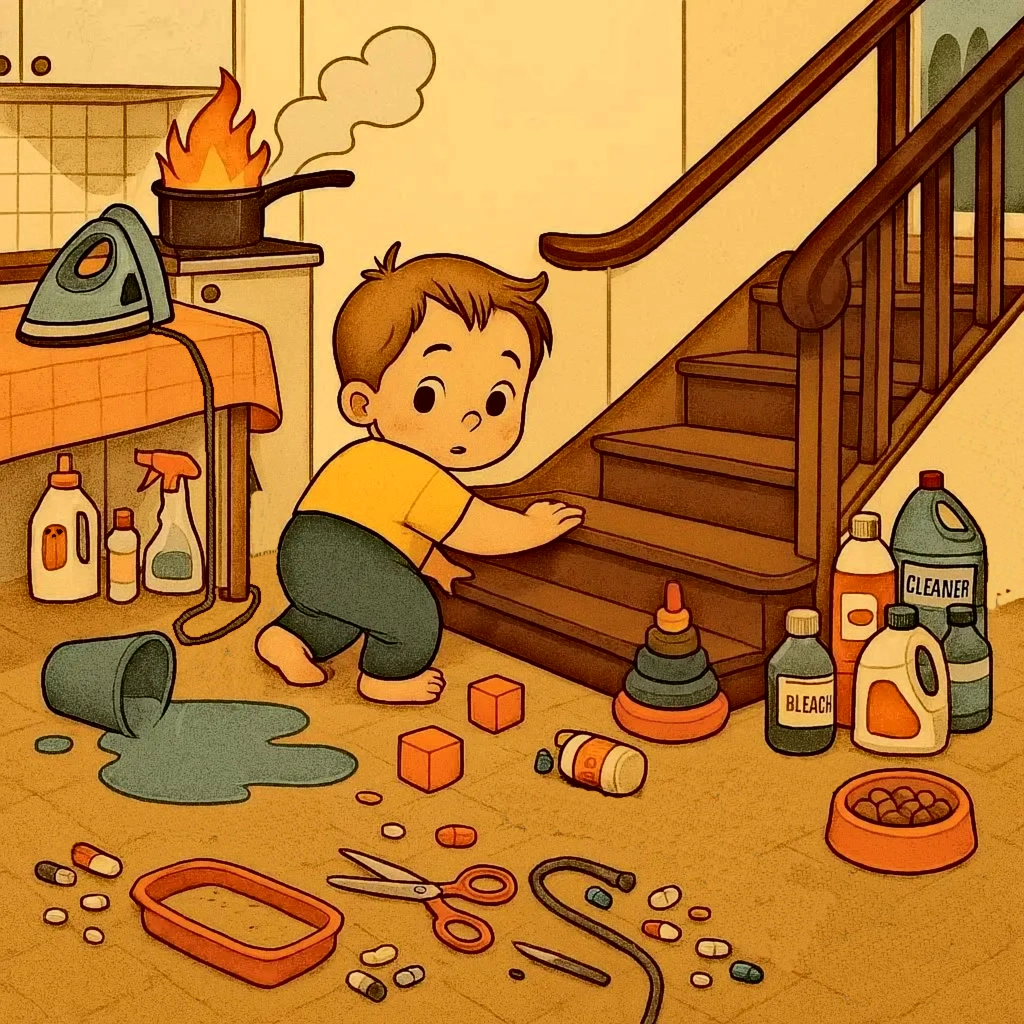
Removing the gate - looks a lot like a beaten gate.
Nearly 3 million kids 1 to 4 years old are treated for home injuries every year — but only 2,000 are directly blamed on baby gates. The loss of containment is the root cause, and the numbers hide the true risks.
How many of those could be prevented, simply keeping the gate up, and stopping escapes and climbs?
Life with babygator™ on your gate is... less... chaotic .
You watch and worry less
With babygator, you know they can't climb — so the times you're away, you don't have to worry anymore.
It is designed for high resistance, day after day
The moments you’re stretched thin. The moments you’re helping another child. The moments life happens. That’s when containment matters most.
No More "We Just Took It Down"
No parent should have to choose between a gate that gets climbed and no gate at all. That is not a solution. That is giving up and accepting huge new risks.
* NEISS: National Electronic Injury Surveillance System — U.S. Consumer Product Safety Commission
† Gate-specific ER visits estimated at ~1,800–2,000/year per NEISS/CPSC data. Does not include stair falls or injuries occurring after a child bypasses the gate, where the gate failure was the root cause.
WARNING: Use only as directed. A determined child may still climb. Keep furniture, stools, cushions, and other leverage objects away from gates.
IMPORTANT: Read and follow all instructions before use. Discontinue use if product is damaged or improperly installed.